
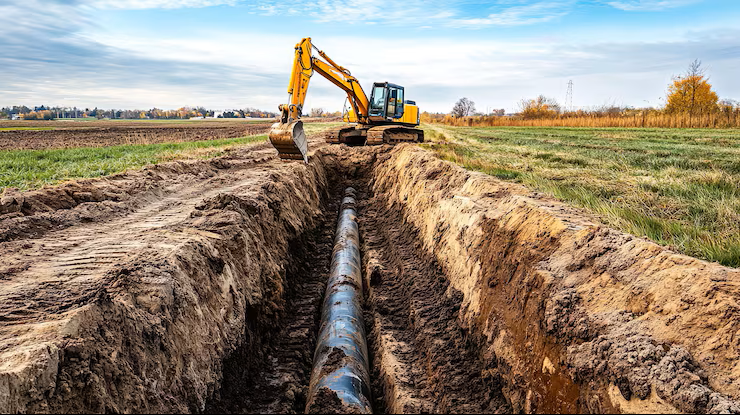
Trenching & drainage excavation might not sound glamorous, but it’s downright essential in places like Wide Bay. Imagine your yard as a sponge soaking up a summer storm – if you don’t provide an escape route for the water, you’re asking for a backyard bog.
I once helped a mate whose soggy lawn turned into a paddling pool overnight; a well-placed trench saved his veggie patch (and our barbecue plans) fast. In this guide, I’ll walk you through the whole shebang, step by step, so you can turn wet ground into a dry, usable yard.
Planning Your Trench Project
First things first: a good dig job is 90% planning. Before even firing up a shovel, make a plan. You’ll want to find any hidden cables or pipes (Australia’s free Before You Dig service is your mate here). Mark out the trench path using stakes and string, and decide how steep the trench needs to be to send water where it won’t cause trouble.
In Wide Bay’s coastal climate (think Bundaberg’s summer deluges), that usually means a gentle 1–3% downhill grade so rainwater flows away naturally. Take care of any hidden surprises before the first shovel hits the ground.
– Check utilities: Use the Before You Dig portal (or call 1100) to get underground service maps.
– Get permissions: For big projects or street-side drains, a council permit might be needed.
– Design the trench: Determine depth, length, and slope. Mark the route with spray paint or string, steering clear of big tree roots or fences.
If you’ve decided to DIY or just want a hand, remember there are pros who live for this. You could call in an Expert Trenching & Drainage Excavation Service in Wide Bay – they’ll know the local soil quirks (like those rich red clays) and come equipped to do it right.
In my experience, bringing someone familiar with the lay of the land can make all the difference. No one wants to nick a power line or spend days on a job that the right machine could finish in hours.
Now, onto the practical stuff: Before you start digging, double-check your plan. Contact local utilities to locate any underground lines. I often call the electric and water companies, even if I’ve used the online service – better safe than sorry when it comes to avoiding surprise outages.
Have your trench design ready so any engineer or council officer can give the go-ahead quickly. This prep might sound boring, but it makes the actual excavation smoother and keeps you on the right side of the regs.
Marking and Mapping the Site
When it’s showtime, mark the trench clearly. Use stakes and mason’s line (or spray paint) to outline the trench edges. The trench should slope towards your drainage exit – a simple rule of thumb is about 1–3% downward (roughly a 2 cm drop per metre).
Picture pouring a jug of water: you want it to glide along the trench without pooling. If you hit obstacles (like a big tree or buried rock), decide whether to cut through or reroute the trench. This careful layout keeps the dig straight and the water running in the right direction.
Equipment and Tools
Choosing the right kit is a game-changer. For a tight backyard job, a mini excavator (maybe 2–3 tonnes) can work wonders under decks and between fences. For wider or deeper trenches, you might switch to a larger backhoe or standard excavator.
I like to pick the smallest digger that can do the job; it costs less and causes less fuss (and less damage to the garden). Make sure you have the right attachments – a narrow trenching bucket is perfect for channel-like digs, and shovels or picks are handy for finishing touches and reaching tight spots.
Here’s a quick tool comparison:
| Equipment | Use Case |
|---|---|
| Mini-excavator | Tight backyards, narrow trenches (small digs) |
| Standard excavator/backhoe | Larger trenches, deeper cuts (medium projects) |
| Trench shield/box | Supports trench walls for digs deeper than 1.5 m |
| Shovels & hand tools | Final shaping, shallow or precise work |
Before digging, inspect your machine or tools: check fuel and hydraulic oil levels, top up all fluids, and ensure everything moves freely. A quick inspection now prevents breakdowns mid-job (and keeps your day on schedule).
Digging and Excavation
Now comes the fun part: digging the trench. Start by removing topsoil (often 10–30 cm deep) and pile it aside – this is the good stuff we’ll save for capping the trench later. Then begin excavating the trench itself. If it’s shallow (under 1 m), you might dig straight to depth.
For deeper trenches, do it in layers. Scoop out a section of soil, and put the spoil at least 1 m from the edge – this prevents extra weight from collapsing the wall. Keep the trench walls neat; in loose sandy soil, you’ll want to angle the walls (batter them back) instead of leaving them vertical, to prevent collapse.
In firmer clay or rock, you can often cut steeper walls. Pace yourself and dig steadily – a rushed dig can lead to mistakes or collapses. Remember: the safe approach is always smarter than the fastest one.
Installing Drainage and Backfilling
With the trench dug to the final depth and shape, install the drainage components. Starting a trench for drainage, showing initial pipe placement in a prepared trench. Begin by laying a bed of coarse gravel or sand in the bottom of the trench (about 5–10 cm thick). Then place your drain pipe or channel.
For many yards, I use a perforated PVC pipe wrapped in weed fabric – this creates a DIY French drain, letting water seep in and flow away. Make sure the pipe runs downhill toward its exit; a gentle 1% grade is usually enough to keep water moving. Once the pipe is in place, cover it with more gravel so water can reach it freely.
Finally, backfill the trench. Remove any shoring or braces first, then throw the saved topsoil (or good fill) back in by the bucketful. Do it in layers (about 10–20 cm at a time), and compact each layer (tamping or a plate compactor works) to minimize future settling. Rake the surface smooth, give it a light watering, and let the turf or plants re-establish. The topsoil you saved helps grass or gardens recover quickly, so the trench blends back into the yard seamlessly.
Safety and Compliance
Don’t skip the boring stuff: safety rules and regulations. In Queensland, trenches over 1.5 m deep are classed as high-risk construction work. This means a Safe Work Method Statement is needed, plus safe entry and exit points (like a ladder every 8–9 m) and protections in place.
Always keep a sturdy ladder or ramp in the trench as you dig. Queensland’s WorkSafe guidelines specifically say trenches ≥1.5 m must be well-shored or safely sloped with barriers around the top. You’ll also want to watch for water accumulating in the trench as you dig – we’ve had to bail many wide-bay digs during the wet season.
Pumps or just buckets can keep the trench dry, which in turn keeps the walls from caving in. Bottom line: working safely and following the rules might feel tedious, but it can save lives (including yours) and hefty fines.
Conclusion
That’s the nutshell process for trenching & drainage excavation in Wide Bay: plan it carefully, pick the right equipment, dig with purpose, install the drain, and backfill smoothly. Wide Bay’s sticky soils and surprise downpours mean good drainage is worth its weight in gold (or at least in dry socks). Now it’s over to you: measure your yard, plot your trench path, and get digging (or call in a pro if that’s easier). Your future dry garden awaits – take action today to stop the puddles before they start.
FAQs
What’s the difference between trenching and general excavation?
Trenching is a type of excavation focused on narrow, deep channels (usually for pipes or cables). Regular excavation might be broader or shallower (like digging a swimming pool or foundation). Trench walls are often much taller than they are wide, so trenching usually has stricter safety rules.
How deep and wide should my trench be?
It depends on the pipe or drain you’re installing. A common residential drain pipe might need a trench about 30–60 cm wide and 50–80 cm deep. If you’re laying a larger stormwater or sewer pipe, the trench might be 1 m deep or more. Always factor in the gravel bed and cover. And remember, any trench over 1.5 m deep in QLD needs shoring or sloping under the regulations.
Do I need special equipment?
For small trenches (like for a backyard French drain), hand tools or a mini excavator often do the trick. For longer or deeper trenches, a larger excavator or backhoe is more efficient. You’ll also need pipe and gravel, and potentially safety gear like shoring boxes if it’s deep. On-site pumps are handy if water starts filling the trench.
How do I avoid hitting utilities?
Before digging, use the free “Before You Dig” service (formerly Dial Before You Dig) to request plans of underground infrastructure. Mark those on your site map. Also visually inspect the site for things like power poles (often lines run nearby), water meters, etc. When you start digging, go slow and use caution if you sense something buried.
What is the benefit of proper drainage excavation?
Proper trenching channels rainwater away from areas where it could cause damage or mud problems. Good drainage prevents flooding of yards and foundations, reduces erosion, and keeps landscapes healthy. In Wide Bay’s often wet climate, an effective drain means you won’t have to wade through puddles after every storm.